
Young hearts get broken,
– The Eurythmics
just like China cups
Look at all the foolishness,
your love has gone and done.
Sydney/Bathurst December 1997
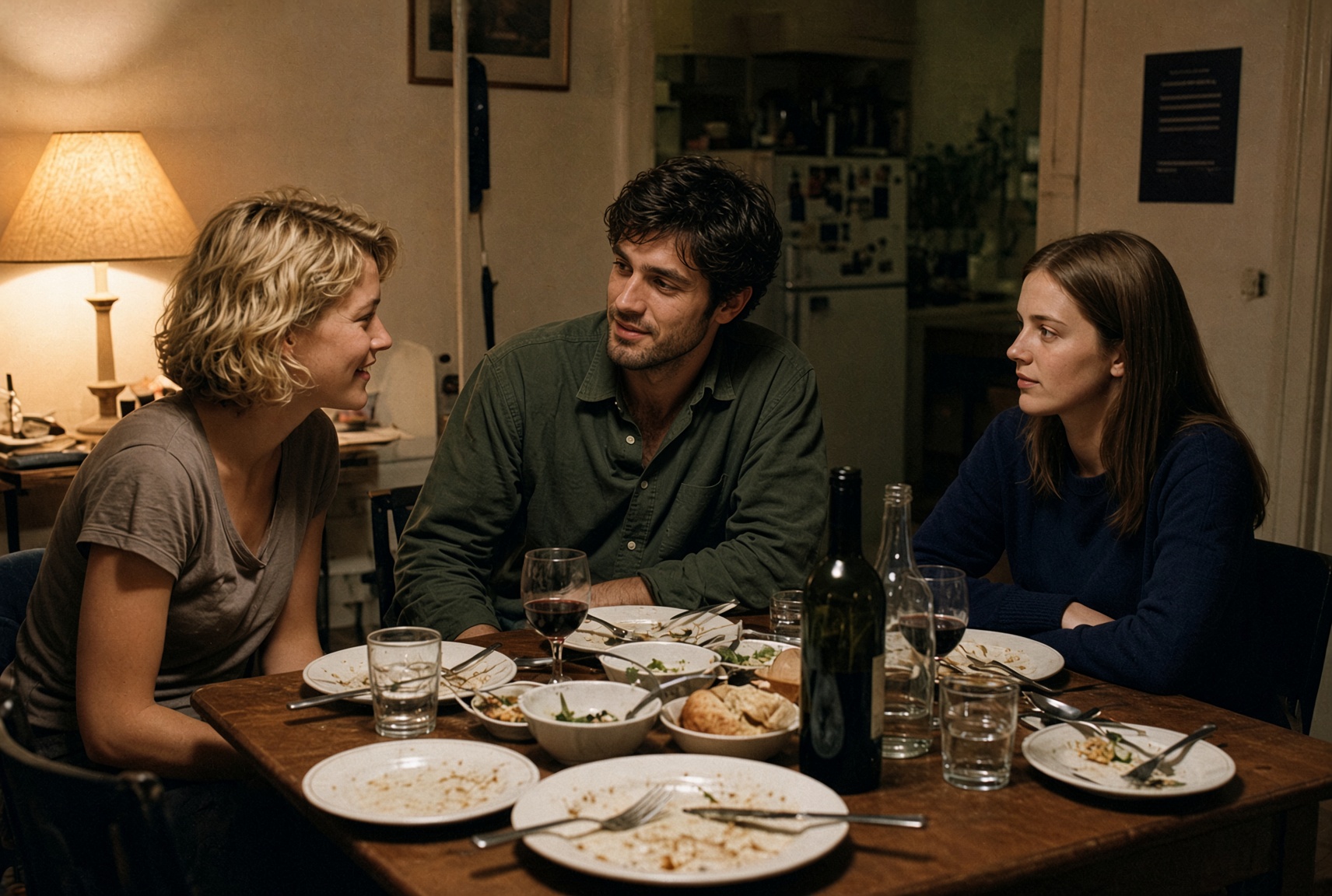
After the initial euphoria, the events of the weekend soon lingered like a stain on Alison’s mind, the kind that no amount of scrubbing could erase. What had started as a whirlwind of private fun in the flat had morphed into a relentless topic of conversation, dissected and exaggerated by anyone who heard until it felt like a public trial. By the time Christian was one verse into his impromptu song, his voice echoing through the cramped walls of Alison’s room, five girls had squeezed in to gawk. Their giggles and whispers that were humorous at first, soon felt like needles pricking at her skin. Far from shrinking under their stares, Christian stood tall and finished his song while all those assembled passed judgement on the spectacle and Alison’s private life. When she finally called a halt to the spectacle, ushering him toward the showers, Alison couldn’t ignore the uninvited hands that grazed him or the playful smacks on his backside. Her stomach churned with a mix of embarrassment and something darker—shame, perhaps, or the creeping realisation that her love life was now public property.
Camilla, meanwhile, revelled in the chaos she’d unintentionally ignited. True to her promise of going out with a bang, she turned the flat into her personal stage. For days after the weekend, she sauntered around in nothing but a towel slung carelessly over her shoulder, whether she was heading to the bathroom or just wandering the halls. Even after retreating to her room for the night, she’d emerge bare if she had to leave, as if daring anyone to challenge her. At first, the other girls tried to rein her in, their protests sharp and exasperated. But Camilla’s brazenness wore them down, and soon they just rolled their eyes, resigned to her exhibitionist antics. Alison, however, couldn’t shake the unease that settled in her chest. Camilla’s carefree defiance only highlighted Alison’s growing discomfort, a gnawing sense that she was being dragged into a spotlight she hadn’t planned.
When Camilla left the flat a week later, her degree complete and her future bright, she seemed to float on a cloud of elation. Farewell parties had sprung up like wildfires, some planned, others erupting spontaneously as friends poured in to celebrate her future. Alison was stunned by the sheer number of people who showed up, many of whom she hadn’t realised Camilla even knew. It was still more surprising that so many of them were also graduating, some already clutching job offers in their fields. The parties buzzed with talk of the future, and Alison found herself swept into conversations about her own plans—plans she thought she’d settled but now felt like a house of cards trembling in the wind.
Her plan for the next year had been clear: defer her studies for a year and move to Canberra with Christian. It had seemed romantic, a bold step toward a shared future with the man she loved. But when her exam results arrived, the ground beneath her crumbled. She had failed—not one subject, but two. Borderline passes haunted the rest. Alison stared at the letter, her hands trembling, her heart pounding so loudly it drowned out the world around her. She had never failed before. She wasn’t one of those effortlessly brilliant students; her straight-A record was the product of relentless hard work, late nights, and a discipline that bordered on obsession. To see “Fail” stamped next to her name was like a slap across the face, a betrayal of everything she thought she was. She read the letter again and again, searching for a mistake, but the words didn’t change. Her mind spiralled, replaying every lecture she’d attended, every note she’d scribbled, every hour she’d spent studying. She questioned how it had gone so wrong, but she already knew the answer.
Camilla’s farewell parties became a blur, each one a fresh assault on Alison’s fraying nerves. She plastered on a smile, laughed when expected, but inside, she was unravelling. Every conversation about her future felt like a judgement. Worse, some of her flatmates took it upon themselves to speak for her.
“Oh, Alison’s not finishing her degree next year,” they’d say. “She’s deferring to follow her boyfriend to Canberra!” The bland statements stung, reducing her carefully considered decision to a lovesick whim. “Deferring? That’s a slippery slope,” strangers would chime in, as if Alison wasn’t standing right there. “He must be some amazing guy!” The laughter that followed felt like a blade twisting in her gut. And then there was the inevitable jab: “Well, just ask Camilla about him. She’s one of the ‘Swinging-Sisters!’”
The nickname had started as a private joke, a cheeky nod to that wild weekend. At first, Alison had laughed along, caught up in the thrill of it all. Camilla, suddenly the show woman, had practically bragged about her role, soaking up the attention like a sponge. But the joke soured for Alison quickly, curdling into something bitter and humiliating. Alison noticed the glances now, the whispered conversations that stopped when she entered a room. She saw people across the party pointing in her direction, their laughter sharp and cutting. People she’d never even met felt bold enough to mock her to her face.
“Alison, are you going to miss Camilla?” one girl asked, her tone syrupy with fake sympathy. “I guess Christian didn’t miss her, either.” The words hit like a punch, and Alison’s face burned as she struggled to respond, her voice caught in her throat.
The humiliation didn’t stop at the flat. At her army depot, where she’d always prided herself on her discipline and competence, other rumours had spread like wildfire. Word of her “promise” to Scott—a fleeting, reckless moment she barely remembered—had reached her comrades. Sniggers followed her through the halls, escalating into outright derision. “Backdoor Benaud” and “Anal-son” were the least cruel of the slurs she overheard, each one chipping away at her dignity. She tried to ignore it, to hold her head high, but the weight of their scorn was crushing. After two weeks of relentless taunts, she couldn’t take it anymore. She quit the army, walking away from a part of her life she’d once cherished, feeling like she had lost a limb.

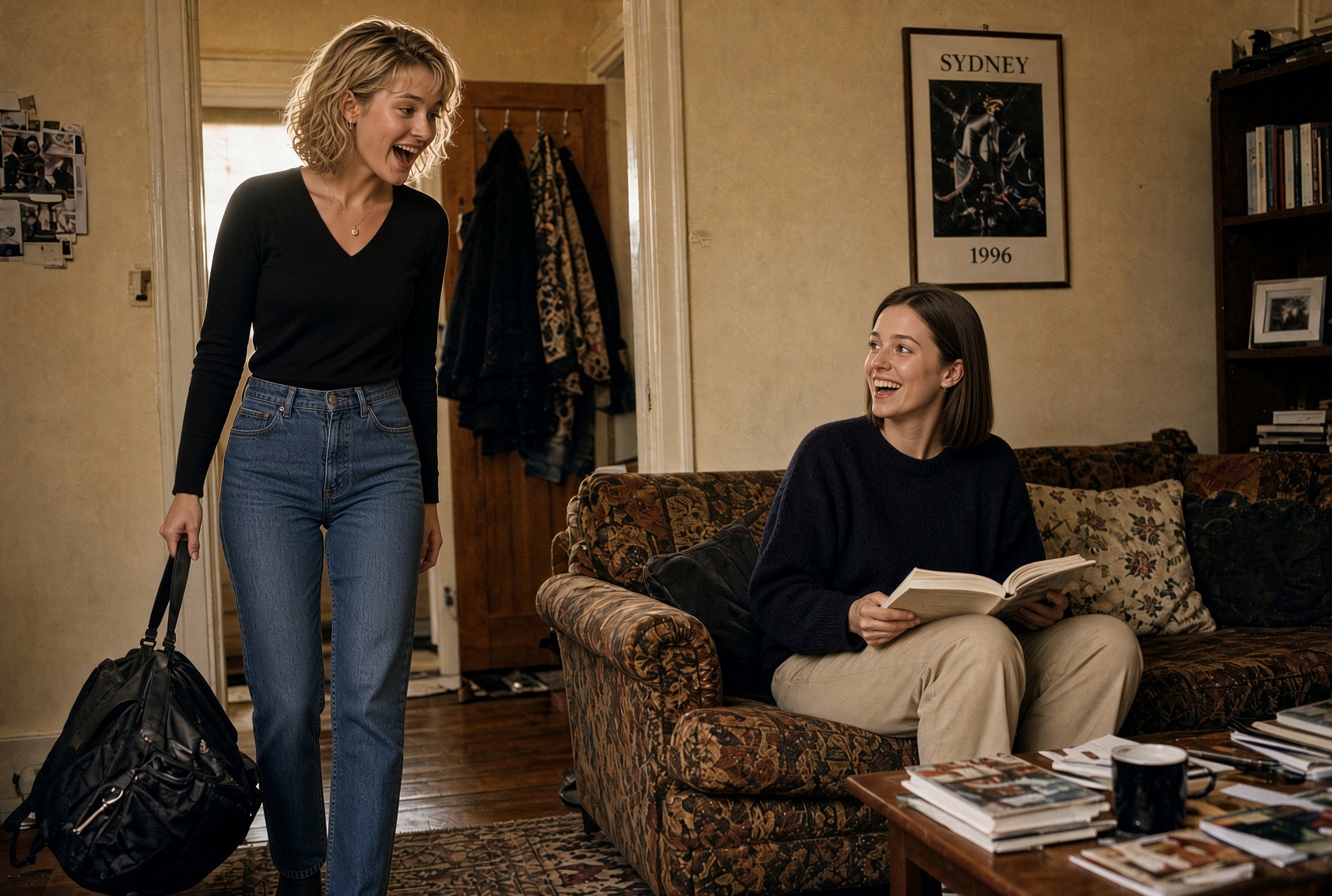
By the time Alison left Sydney for her mother’s house in Bathurst for Christmas, her world felt like it was collapsing. She packed in silence, avoiding her flatmates’ eyes, her thoughts a tangled mess of anger, shame, and self-doubt. When Christian called the flat, his voice warm and familiar, she cut him off abruptly, claiming she was too busy to talk. The lie felt easier than admitting how lost she felt. As the bus carried her away from Sydney, she stared out the window, her reflection a ghostly blur against the darkening landscape. Tears streamed down her face, unbidden, as the weight of her failures pressed down on her. Just weeks ago, she’d been in love, planning a future with Christian, her degree still within reach. Now, she felt like a failure teetering on the edge of a catastrophic mistake.
Her mother’s house, once a place of comfort, offered no refuge. Alison’s mother had never approved of her plan to defer, and she’d spent the last month sharpening her arguments. When she picked Alison up from the bus, she took one look at her daughter’s tear-streaked face and softened, but only slightly. Alison refused to explain her distress, but her mother was perceptive, sensing the cracks in her daughter’s carefully constructed life-plan. Over the next few days, she pressed gently but relentlessly, her words laced with warnings about men and disappointment.
“Men always turn into their fathers,” she said one evening, her voice heavy with the weight of her own past. “If only I’d listened to my mother.” She recounted her own story—how Alison’s father had left her for another woman when Alison was just a baby. The implication was clear: Alison was walking the same path.
The words burrowed into Alison’s already fragile mind. She lay awake at night, her mother’s warnings mingling with the taunts from Sydney, the sting of her exam failures, and the uncertainty of her future. She felt untethered, as if the person she’d been—confident, driven, in love—had vanished. In her place was someone she didn’t recognise, someone drowning in doubt and regret. Her mother’s subtle campaign chipped away at her resolve; each comment a reminder of her perceived failures. Alison questioned everything: her relationship with Christian, her decision to defer, even her own worth. The logical part of her knew her mother’s words were skewed by her own bitterness—after all, if her mother had listened to her own mother, Alison wouldn’t exist. But in her current state, the irony was lost on her. All she could feel was the suffocating weight of her mother’s disappointment, layered atop the foundation of her own.
By Christmas Eve, Alison was a wreck. She wrapped her gift to Christian then spent the night pacing her childhood bedroom, trying to justify the move to Canberra, to cling to the love she’d felt just weeks ago. But every justification felt flimsy, every memory tainted by the weekend that had spiralled out of control. She didn’t know when she finally fell asleep, but when she woke on Christmas morning, a solution had crystallised in her mind. It wasn’t a choice born of clarity but of exhaustion, a desperate attempt to reclaim some semblance of control. As she joined her family for Christmas, she felt a fleeting sense of relief, like a weight had been lifted, though it was quickly replaced by numbness.

The day passed in a blur of forced smiles and holiday rituals, and for a moment, Alison thought she might elude her troubles. Then the phone rang. Her mother answered, her eyes flicking toward Alison with a knowing look.
“Alison, it is for you. It’s Christian.”

Ghosts hide in the shadows of our souls.


Leave a Reply